
Hotel Architect Beginner Guide: What to Build First
 123
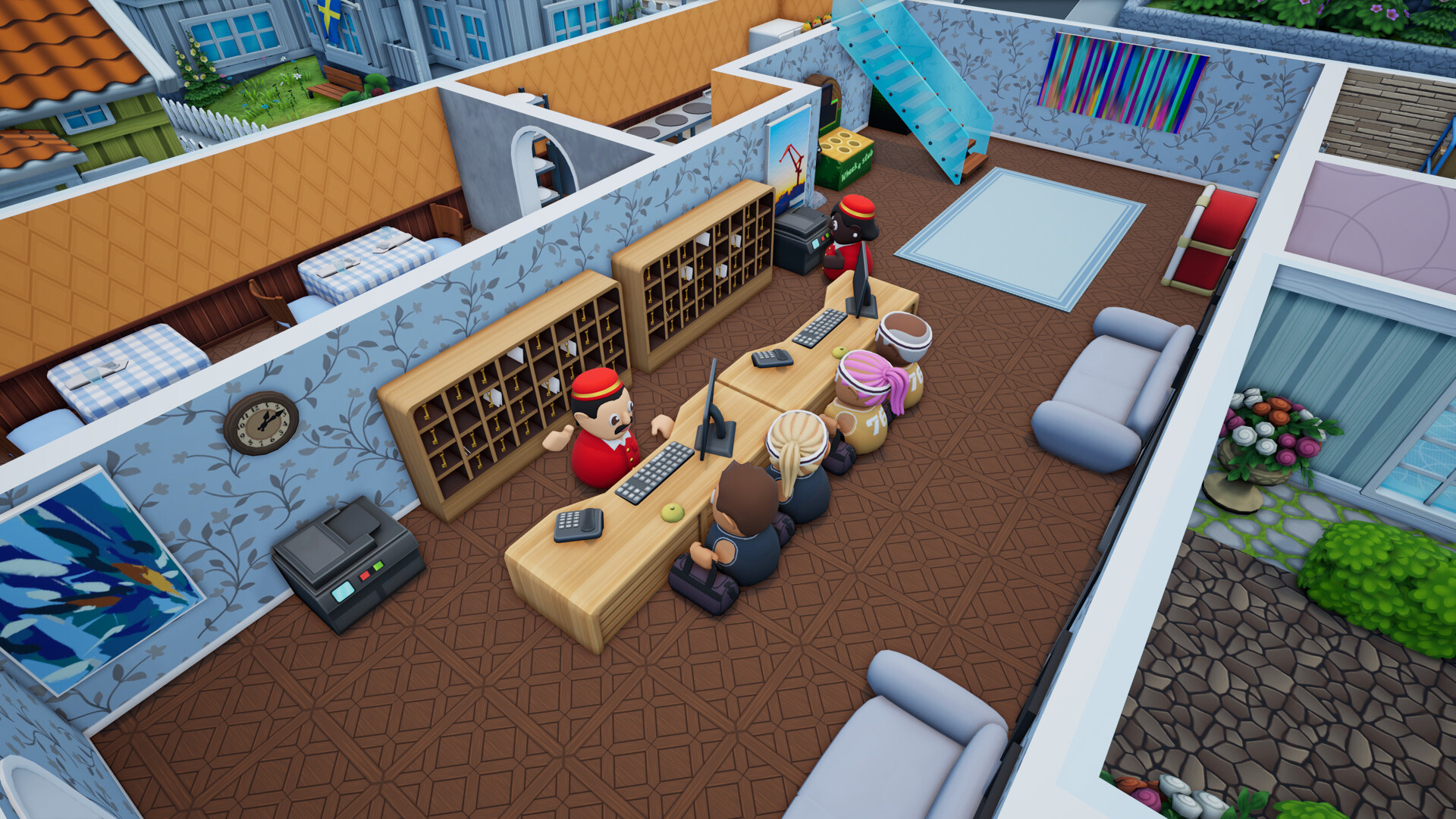
123Screenshot breakdown
What this kind of opening gets right
- Keep the first room block tight. A compact cluster is easier to clean, restock, and maintain than a wide early footprint.
- Put guest flow where staff can actually support it. If the route from reception to rooms is short, small service problems stay small.
- Delay decorative ambition. Empty prestige space looks harmless at first, but it quietly turns into extra travel distance and extra cost.
Strategy takeaway: in the first stretch, layout discipline usually creates more profit than trying to impress higher-tier guests too early.
If you want the short version, start with a guest mix your first hotel can actually support, keep the layout tight, and resist the urge to overbuild. Most early runs go wrong because the hotel grows faster than the support loop behind it.
Start here
Use this page when the real question is what to build first
Stay here if your opening feels messy, overbuilt, or directionless and you need a clean first layout rather than one specific fix.
If the issue is money
Go next to the money-recovery page
Open How to Stop Losing Money if the hotel is already operating and the main problem is that the balance keeps sliding.
If the issue is the first map
Go next to Gothenburg
Open Gothenburg Scenario Guide if you mostly need objective order and scenario pacing rather than a generic opener.
Your first job is stability, not style
Section titled “Your first job is stability, not style”In the opening stretch, you are not building your dream hotel. You are building a hotel that can check people in, keep rooms clean, and make enough money to stay alive long enough for the next upgrade.
That means your early priorities should usually be:
- A compact reception flow
- A small batch of bedrooms you can actually service
- Bathrooms close to those rooms
- Enough cleaning and maintenance support to stop the hotel from slipping
- Only the extra facilities needed for the guest types you are targeting
If a room is technically finished but the walk distance, dirt, or staff delays are bad, the room will still perform like a weak investment.
What to build first
Section titled “What to build first”Start with a layout that is easy for staff to cross in a few seconds rather than a grand floor plan that looks future-proof. The early game rewards hotels that are boring in the best possible way.
Build in this order:
- Reception
- A few basic bedrooms
- Shared bathroom coverage or simple ensuites where needed
- Cleaning and maintenance support
- A gym or the next requirement that opens your target guest type
The first big mistake new players make is spreading rooms across too much empty space. The second is adding expensive services before the base hotel can reliably turn rooms over.
Which guests you should care about first
Section titled “Which guests you should care about first”In the early game, the safest money usually comes from guests your current hotel can already satisfy. That usually means simpler rooms, practical amenities, and a layout that does not waste staff time.
- Start with the most basic demand your starter hotel already handles well.
- Move into more demanding guests only once room quality and support spaces stop feeling stretched.
Treat high-end demand as something you grow into. Chasing better-paying guests before your room quality, value, and supporting zones are ready usually creates more cost than payoff.
Staff hires that matter more than they look
Section titled “Staff hires that matter more than they look”A weak staff plan will quietly ruin an otherwise decent layout.
- Hire enough reception coverage that arrivals do not bottleneck.
- Add cleaners before cleanliness becomes a visible problem.
- Do not ignore maintenance just because nothing is broken yet.
If the hotel feels slow, the problem is often not “more rooms needed.” It is usually one of these:
- check-in queue
- room turnover
- supplies or repairs lagging behind
- long walking paths between related rooms
When to expand
Section titled “When to expand”Expand only after the current floor plan is earning cleanly. A good signal is when rooms are being used, staff are coping, and you are not fixing the same operational problem every few minutes.
Add a new service only when one of these is true:
- it unlocks a better guest tier you can realistically support
- it solves a bottleneck your current guests already care about
- it is needed for a scenario objective you are about to push
Common beginner mistakes
Section titled “Common beginner mistakes”- Building too many rooms before staffing catches up
- Paying for fancy rooms without the guest demand to fill them
- Chasing long walk distances across a wide floor
- Unlocking optional complexity before the base hotel is profitable
- Ignoring why guests are unhappy and just adding more furniture
Quick answers
Section titled “Quick answers”Should I build big rooms early in Hotel Architect?
Section titled “Should I build big rooms early in Hotel Architect?”Usually no. Bigger rooms only help when they unlock a better guest tier or stronger value. Early on, oversized rooms often create more service pressure than profit.
When should I expand beyond the first room block?
Section titled “When should I expand beyond the first room block?”Expand only after the current layout is earning cleanly, staff are coping, and you are not still solving the same cleanliness or check-in problem every few minutes.
What to do next
Section titled “What to do next”Money still slipping
Read the recovery checklist next
Continue with How to Stop Losing Money if the layout idea is clear but the hotel still cannot stay profitable.
Scenario pressure
Move into the first map guide
Continue with Gothenburg Scenario Guide if objectives and timing matter more than generic opener advice now.
Room planning
Check requirements before you expand
Continue with All Room Requirements if your next question is which rooms, bathrooms, or guest standards your layout should support.
If you want a broader site route after the opener, use the Hotel Architect Guide homepage, the Scenario Guides hub, or the Rooms and Requirements hub.